Contents
Everything You Need to Know About Debt Service Coverage Ratio LoansWhat Is a DSCR Loan?DSCR Loan Numbers at a Glance (2026)How the DSCR Ratio WorksA Complete DSCR Underwrite, Line by LineWho Qualifies for a DSCR Loan?DSCR Loans vs. Conventional LoansDSCR vs. the AlternativesLoan Terms and OptionsProperty Types That QualifyThe DSCR Loan Process: Start to FinishStrategies for Maximizing Your DSCRCommon MisconceptionsIs a DSCR Loan Right for You?Next StepsThe Complete DSCR LibraryComplete Guide
How DSCR Loans Work: The Complete Guide for Real Estate Investors (2026)
Everything You Need to Know About Debt Service Coverage Ratio Loans
Published by Pinnacle Funding Network | Updated August 2026
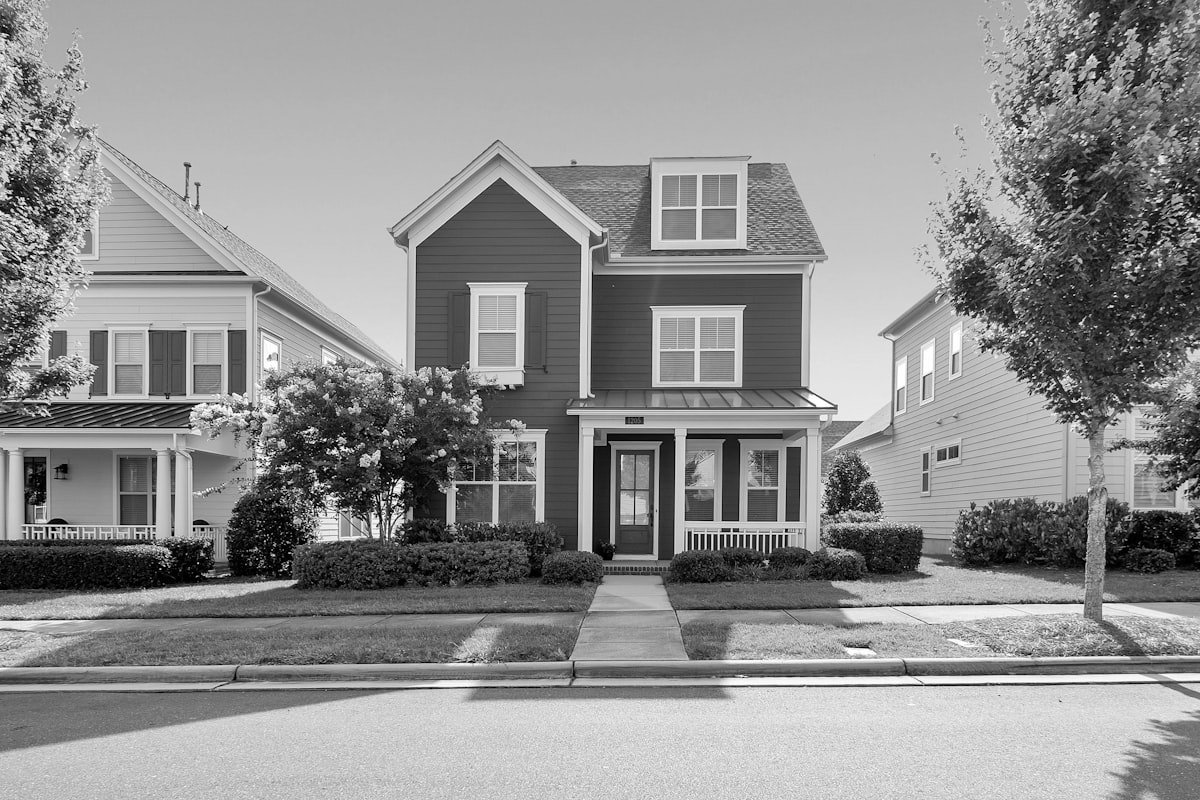
The short answer: a DSCR loan is an investment property mortgage that qualifies on the property's rental income instead of your personal income. In 2026, the standard profile is a 660 minimum credit score, 20 percent down, a 1.00x DSCR ratio (programs to 0.75x with a larger down payment), and loan amounts from $55,000 to $5 million, with no tax returns, W-2s, or DTI review. As of October 2026, DSCR rates start at 5.8 percent on a 30-year fixed, and most files fund in 20 to 30 days.
If you own investment properties - or want to - there's a good chance your bank has made your life harder than it needs to be. Tax returns, W-2s, debt-to-income ratios, caps on how many properties you can finance. It's a system designed for homeowners, not investors.
DSCR loans were built for a different reality: yours. See our DSCR loan programs.
This guide covers everything - what DSCR loans are, how they work, who qualifies, how to calculate your ratio, and when they make sense over conventional financing. No jargon for the sake of jargon. No sales pitch. Just the information you need to make a smart decision.
What Is a DSCR Loan?
A DSCR loan - Debt Service Coverage Ratio loan - is a type of mortgage that qualifies based on what the property earns, not what you earn personally.
Instead of asking "how much does the borrower make?" the lender asks "does this property generate enough rental income to cover the mortgage payment?"
That's it. That's the fundamental shift.
Traditional loan qualification: Your income → Your debt-to-income ratio → Your ability to repay
DSCR loan qualification: The property's income → The property's DSCR → The property's ability to pay for itself
This distinction matters enormously for real estate investors because many of them - especially self-employed investors, business owners, and full-time investors - show low income on tax returns by design. Their accountant is doing exactly what they should: minimizing taxable income. But that same strategy makes banks say no.
DSCR loans solve that problem entirely.
DSCR Loan Numbers at a Glance (2026)
Every number an investor needs to sanity-check a deal, in one table. These are Pinnacle Funding Network's published 2026 program parameters.
| Parameter | 2026 Standard |
|---|---|
| Credit score | 660 for most programs |
| DSCR ratio | 1.00x standard; select programs as low as 0.75x with a larger down payment; best pricing at 1.25x+ |
| LTV | Up to 80% on purchases; up to 75% on cash-out refinances |
| Loan amounts | $55,000 to $5,000,000 per loan |
| Rates | Starting at 5.8% on a 30-year fixed (as of October 2026) |
| Reserves | 3 to 6 months of PITIA, scaling with loan size |
| Close time | 20 to 30 days; as few as 20 on clean files |
| Income documentation | None; the property's rent qualifies the loan |
| Coverage | 48 states, 99 published market guides |
How the DSCR Ratio Works
The Debt Service Coverage Ratio is a simple formula:
DSCR = Monthly Rental Income ÷ Monthly Mortgage Payment (PITIA)
PITIA stands for Principal, Interest, Taxes, Insurance, and Association dues (HOA).
Example:
- Monthly rent: $3,500
- Monthly PITIA: $3,200
- DSCR = $3,500 ÷ $3,200 = 1.09
A DSCR of 1.09 means the property earns 9% more than its total monthly obligations. It covers itself with room to spare. Use our free DSCR calculator to run the numbers on your deal.
What Counts as Income
For long-term rentals, lenders typically use one of these:
- Existing lease: The actual rent on a signed lease agreement
- Market rent analysis: An appraiser's estimate of what the property would rent for (Form 1007 or 1025)
For short-term rentals (Airbnb, VRBO), some lenders accept:
- AirDNA projections: Estimated annual income based on comparable STR properties in the area
- Actual STR income: 12-24 months of booking history from your platform dashboard
What Counts as Debt Service
The PITIA calculation includes:
- Principal & Interest: Your monthly loan payment
- Property Taxes: Annual taxes divided by 12
- Insurance: Homeowner's or landlord policy, annual premium divided by 12
- HOA/Association Dues: If applicable, monthly amount
- Flood Insurance: If in a flood zone
DSCR Thresholds
| DSCR | What It Means | Typical Lender Response |
|---|---|---|
| Below 0.75 | Property loses money significantly | Most lenders decline |
| 0.75 - 0.99 | Property doesn't fully cover payments | Limited programs available, higher rates |
| 1.00 | Breakeven - income exactly covers PITIA | Minimum for most programs |
| 1.00 - 1.25 | Positive cash flow | Standard approval range |
| 1.25+ | Strong cash flow | Best rates and terms available |
Most DSCR lenders require a minimum ratio of 1.00. For a deeper dive on how this calculation works, read How to Calculate Your DSCR. Some programs go as low as 0.75 for strong borrowers with high credit scores and significant reserves, but expect higher interest rates.
A Complete DSCR Underwrite, Line by Line
Formulas are abstract. Here is the entire underwrite on a real deal profile, the same way an underwriter builds it.
The deal: a 3BR/2BA duplex-style rental in the Dallas metro. Purchase price $320,000. Standard 80 percent LTV purchase, loan amount $256,000, at an illustrative 6.50 percent fixed 30-year (as of October 2026, rates start at 5.8 percent; every file prices to its own credit, leverage, and ratio profile).
| PITIA Component | Monthly | Where the number comes from |
|---|---|---|
| Principal & interest | $1,618 | $256,000 amortized over 30 years at the illustrative rate |
| Property taxes | $560 | County assessor rate on investment property, divided by 12 |
| Insurance | $140 | Landlord policy annual premium, divided by 12 |
| HOA | $0 | None on this property |
| Total PITIA | $2,318 | The full monthly carrying cost |
The appraiser's Form 1007 market rent analysis supports $2,750 per month. DSCR = $2,750 / $2,318 = 1.19x. The property qualifies with roughly $432 of monthly margin.
Now watch what leverage does to the ratio. Same property, same rent, smaller loan:
| Structure | Loan | P&I | PITIA | DSCR |
|---|---|---|---|---|
| 80% LTV | $256,000 | $1,618 | $2,318 | 1.19x |
| 75% LTV | $240,000 | $1,517 | $2,217 | 1.24x |
| 70% LTV | $224,000 | $1,416 | $2,116 | 1.30x |
Ten points of leverage moves this file from standard pricing into the 1.25x+ top-pricing tier. That trade, cash at closing versus rate for the life of the loan, is the single most common structuring decision in DSCR lending, and it is exactly the scenario math a same-day quote lays out for your specific deal.
Who Qualifies for a DSCR Loan?
For a full breakdown, see our detailed guide on how to qualify for a DSCR loan.
Typical Borrower Profile
- Real estate investors purchasing or refinancing rental property
- Self-employed individuals with complex tax returns
- W-2 employees who don't want to use personal income documentation
- Foreign nationals investing in US real estate
- Investors who've hit the 10-property conventional loan cap
- LLC or entity borrowers
Basic Requirements
| Requirement | Typical Range |
|---|---|
| Credit Score | 660 minimum (best rates at 740+) - credit score details |
| Down Payment | 20-25% (75-80% LTV) - down payment guide |
| Reserves | 3 to 6 months of PITIA in liquid assets, scaling with loan size |
| DSCR | 1.00x minimum (some programs at 0.75x) |
| Property Type | 1-4 unit residential, 5+ unit, condo, townhome |
| Loan Amount | $55,000 - $5,000,000 |
| Occupancy | Investment property only (not primary residence) |
| Experience | Not required (first-time investors eligible) |
What Is NOT Required
This is where DSCR loans fundamentally differ from conventional:
- No W-2s or pay stubs. Your employment status doesn't matter.
- No tax returns. Your AGI could be $0 - it's irrelevant.
- No debt-to-income ratio. Your personal debts don't factor in.
- No income verification. The property's income is all that matters. Learn more about no-income-verification investment property loans.
- No property count limits. Own 1 property or 50 - no cap. See how many DSCR loans you can have.
DSCR Loans vs. Conventional Loans
For a full side-by-side comparison, read DSCR Loans vs. Conventional: Which Is Right for Your Investment?
| Factor | DSCR Loan | Conventional Loan |
|---|---|---|
| Income Docs | None | Full (W-2, tax returns, pay stubs) |
| Qualification Basis | Property cash flow | Borrower income + DTI |
| Property Limit | Unlimited | 4-10 (depending on lender) |
| Closing Speed | 20 to 30 days | 30-60 days |
| Interest Rate | Higher (typically 1-2% above conventional) | Lower |
| Down Payment | 20-25% | 15-25% (investment) |
| Available to LLCs | Yes | Limited |
| Foreign Nationals | Yes (many programs) | Rarely |
| Self-Employed Friendly | Extremely | Often problematic |
When DSCR wins: You're self-employed, own multiple properties, want to close fast, buy in an LLC, or simply don't want to deal with income documentation.
When conventional wins: You have strong W-2 income, excellent DTI, fewer than 4 investment properties, and rate is your top priority.
DSCR vs. the Alternatives: The 2026 Decision Matrix
DSCR is one of four realistic paths to financing an investment property. Here is the whole landscape in one view.
| Factor | DSCR | Conventional | Bank Statement | Hard Money |
|---|---|---|---|---|
| Qualifies on | Property rent | Personal income + DTI | Deposit history | The asset + exit plan |
| Income docs | None | W-2s, tax returns | 12-24 months of statements | None |
| Term | 30-year | 30-year | 30-year | 6-24 months |
| Typical close | 20 to 30 days | 30-60 days | 30-45 days | Days, not weeks |
| Property count cap | None | 4-10 | Varies | None |
| LLC vesting | Yes | Limited | Limited | Yes |
| Best for | Buy-and-hold rentals at scale | W-2 borrowers, first rentals | Primary residence for the self-employed | Flips and bridge situations |
The sixty-second decision: holding a rental long term with any documentation friction, DSCR. Strong W-2, low DTI, and under four properties, conventional still wins on rate. Buying your own home while self-employed, bank statement. Buying, renovating, and exiting inside a year, hard money or a fix and flip bridge, then refinance the keeper into DSCR. That last move is the BRRRR strategy, and it is how most portfolios in this market actually get built.
Loan Terms and Options
Rate Structures
- 30-Year Fixed: Predictable payments for the life of the loan. Most popular for buy-and-hold investors.
- 5/1 ARM: Fixed for 5 years, then adjusts annually. Lower initial rate. Good if you plan to refinance or sell within 5 years.
- 7/1 ARM: Fixed for 7 years. Middle ground between stability and savings.
- Interest-Only: Available on some programs. Lower monthly payment but no principal reduction.
Prepayment Penalties
Most DSCR loans include a prepayment penalty. Common structures:
- 5-4-3-2-1: 5% in Year 1, decreasing 1% per year
- 3-2-1: 3% in Year 1, 2% in Year 2, 1% in Year 3, then none
- No prepay: Available but typically at a higher interest rate (+0.25% to +0.50%)
Prepayment penalties are not inherently bad. If you're holding the property long-term, they lower your rate.
Points and Fees
- Origination points: 2-3% of loan amount (varies by lender)
- Closing costs: Typically 2-4% of loan amount (appraisal, title, insurance, escrow)
- Rate buydown: You can pay additional points upfront to lower your interest rate
| Structure | How it behaves | Who it suits |
|---|---|---|
| 30-year fixed | Predictable payment for the life of the loan | Buy and hold. The most common choice by a distance |
| 5/1 ARM | Fixed for five years, then adjusts annually. Lower initial rate | A plan to refinance or sell inside five years |
| 7/1 ARM | Fixed for seven years, then adjusts | The middle ground between stability and a lower start |
| Interest-only | Lower monthly payment, no principal reduction | Available on some programs where cash flow matters more than amortization |
| Structure | What it costs to exit early | Effect on your rate |
|---|---|---|
| 5-4-3-2-1 | 5% in year one, falling one point a year through year five | Lowest rate of the three |
| 3-2-1 | 3% in year one, 2% in year two, 1% in year three, nothing after | Middle |
| No prepay | Nothing | Typically 0.25 to 0.50 higher |
A prepayment penalty is not automatically a bad term. If you intend to hold the property, accepting one buys you a lower rate for the whole hold.
| Item | Typical range | What it covers |
|---|---|---|
| Origination points | 2 to 3% of the loan amount | Varies by lending partner |
| Closing costs | 2 to 4% of the loan amount | Appraisal, title, insurance and escrow |
| Rate buydown | Optional | Additional points paid upfront to lower the interest rate |
Property Types That Qualify
DSCR loans work on a wide range of investment property types:
- Single-family residences (SFR)
- 2-4 unit properties (duplex, triplex, quadplex)
- 5+ unit multifamily (with some lenders)
- Condos and townhomes (warrantable and some non-warrantable)
- Short-term rentals (Airbnb, VRBO)
- Mixed-use properties (some lenders)
- Rural properties (with restrictions)
What typically does NOT qualify:
- Primary residences
- Second homes / vacation homes (personal use)
- Vacant land
- Commercial-only properties (office, retail, industrial)
| Qualifies | Does not qualify |
|---|---|
| Single-family residences | Primary residences |
| 2 to 4 unit properties, duplex through quadplex | Second homes and vacation homes in personal use |
| 5+ unit multifamily, with some lending partners | Vacant land |
| Condos and townhomes, warrantable and some non-warrantable | Commercial-only property: office, retail, industrial |
| Short-term rentals | |
| Mixed-use, with some lending partners | |
| Rural properties, with restrictions |
The DSCR Loan Process: Start to Finish
For a step-by-step walkthrough, see How to Apply for a DSCR Loan.
Step 1: Pre-Qualification (Day 1-3)
You provide basic information: property details, estimated rental income, credit score range, and desired loan amount. Your lender runs the initial numbers to confirm you are in the ballpark.
Step 2: Application (Day 3-5)
Submit a full application with property details, entity documents (if applicable), proof of funds for down payment and reserves, and credit authorization.
Step 3: Appraisal (Day 5-14)
The lender orders an appraisal. The appraiser evaluates the property's value and, for DSCR purposes, the market rent (Form 1007 for SFR or 1025 for 2-4 units). This is the most variable part of the timeline.
Step 4: Underwriting (Day 7-18)
Your file goes to underwriting. The underwriter reviews credit, property value, DSCR calculation, entity documentation, and reserves. You may receive conditions - additional items needed before final approval.
Step 5: Conditional Approval (Day 14-21)
You'll receive approval with conditions. Clear them quickly and you stay on track.
Step 6: Clear to Close (Day 18-25)
All conditions satisfied. Closing documents are prepared.
Step 7: Closing and Funding (Day 21-28)
Sign at a title company or with a mobile notary. Funds disburse. The property is financed.
Total timeline: 21-28 days from complete application to funding. Some deals close faster.
| Days | Stage | What is happening |
|---|---|---|
| 1 to 3 | Pre-qualification | Property details, estimated rent, credit range and desired loan amount. Your lender runs the initial numbers |
| 3 to 5 | Application | Full application, entity documents, proof of funds for down payment and reserves, credit authorization |
| 5 to 14 | Appraisal | Value plus the market rent schedule, Form 1007 on a single family or 1025 on 2 to 4 units. The most variable part of the timeline |
| 7 to 18 | Underwriting | Credit, value, the ratio, entity documentation and reserves. Conditions may be issued |
| 14 to 21 | Conditional approval | Approval subject to conditions. Clearing them quickly is the single biggest thing you control |
| 18 to 25 | Clear to close | All conditions satisfied, closing documents prepared |
| 21 to 28 | Closing and funding | Signing at a title company or with a mobile notary, then funds disburse |
Stages overlap, which is why the day ranges do. Total elapsed time is 21 to 28 days from a complete application to funding, and some files close faster.
Strategies for Maximizing Your DSCR
If your DSCR is borderline, here are strategies to improve it:
- Increase rent. If you're below market, adjust before applying. Even a small increase can push you over 1.00.
- Reduce the loan amount. A larger down payment means a smaller mortgage payment, which improves the ratio.
- Choose a longer amortization. 30-year amortization has lower monthly payments than 15 or 20-year.
- Consider an ARM. The lower initial rate on a 5/1 or 7/1 ARM reduces your monthly payment.
- Buy down the rate. Paying points upfront reduces your rate and monthly payment.
- Challenge the rent estimate. If the appraiser's market rent seems low, provide comparable lease data to support a higher number.
- Reduce expenses. Shop insurance, appeal property taxes, or negotiate HOA fees.
Common Misconceptions
"DSCR loans are only for experienced investors."
Not true. First-time investors qualify for DSCR loans. Experience is not a requirement - the property's cash flow is.
"DSCR rates are unreasonably high."
DSCR rates are typically 1-2% higher than conventional. But conventional loans require 2 years of tax returns, 30-60 day closings, and cap you at 4-10 properties. The rate premium buys you speed, simplicity, and scalability.
"You need a DSCR above 1.25 to qualify."
Most programs require 1.00. Some go as low as 0.75. The 1.25 threshold is where you get the best rates - it's a pricing tier, not a hard cutoff.
"DSCR loans are hard money."
They are not. DSCR loans are long-term (30-year) mortgage products with fixed or adjustable rates. Hard money is short-term (6-24 months) with significantly higher rates. Different products for different purposes.
| The belief | What is actually the case |
|---|---|
| DSCR loans are only for experienced investors | First-time investors qualify. Experience is not a requirement. The property's cash flow is |
| DSCR rates are unreasonably high | They run above conventional, and the premium buys speed, no income documentation and no cap on how many properties you hold. Conventional financing wants two years of returns, 30 to 60 days, and stops you at four to ten properties |
| You need a ratio above 1.25 to qualify | Most programs require 1.00 and some go to 0.75. The 1.25 mark is where the best pricing starts. It is a pricing tier, not a cutoff |
| DSCR loans are hard money | They are 30-year mortgages with fixed or adjustable rates. Hard money is 6 to 24 months at materially higher cost. Different products, different jobs |
Is a DSCR Loan Right for You?
Ask yourself these questions:
- Are you buying or refinancing an investment property (not your primary home)?
- Does the property generate rental income (or will it)?
- Would you prefer not to provide tax returns, W-2s, or income documentation?
- Do you own (or plan to own) more than 4 investment properties?
- Do you want to close in 20 to 30 days instead of 45 to 60 days?
If you answered yes to any of these, a DSCR loan is worth exploring. New to DSCR? Start with our first-time investor's guide to DSCR loans.
Next Steps
If you'd like to see what a DSCR scenario looks like for a specific property, request your free quote or try our DSCR calculator. We'll run the numbers - rental income, DSCR calculation, estimated rate, monthly payment, and cash flow - for your specific deal. No commitment, no pressure. Just information.
James Loffredo, Principal
Pinnacle Funding Network
214-885-4313
info@pinnaclefundingnetwork.com
pinnaclefundingnetwork.com
Pinnacle Funding Network is a correspondent lender and loan originator. PFN originates loans and funds them through its network of institutional capital partners, who make final funding decisions; PFN may sell or assign loans at or after closing. All loan programs are subject to borrower eligibility, property qualification, and lender approval. Rates and terms are subject to change without notice.