Contents
What Is Build to Rent (BTR)?Why Investors Are Building Instead of BuyingThe BTR Financing Strategy: Construction to DSCRHow the Two-Loan Strategy WorksBTR Deal Economics with Detailed ExampleBest Markets for Build to RentSingle-Family BTR vs. Small MultifamilySpec Homes vs. Custom Builds for BTRWorking with Builders and General ContractorsPermits, Timelines, and Budget ManagementBTR Exit StrategiesTax Advantages of New Construction RentalsCommon BTR MistakesHow Pinnacle Funding Network Supports BTR InvestorsComplete Guide
Build to Rent (BTR): The Investor's Complete Guide to Building Rental Properties (2026)
What Is Build to Rent (BTR)?
Published by Pinnacle Funding Network | Updated March 2026
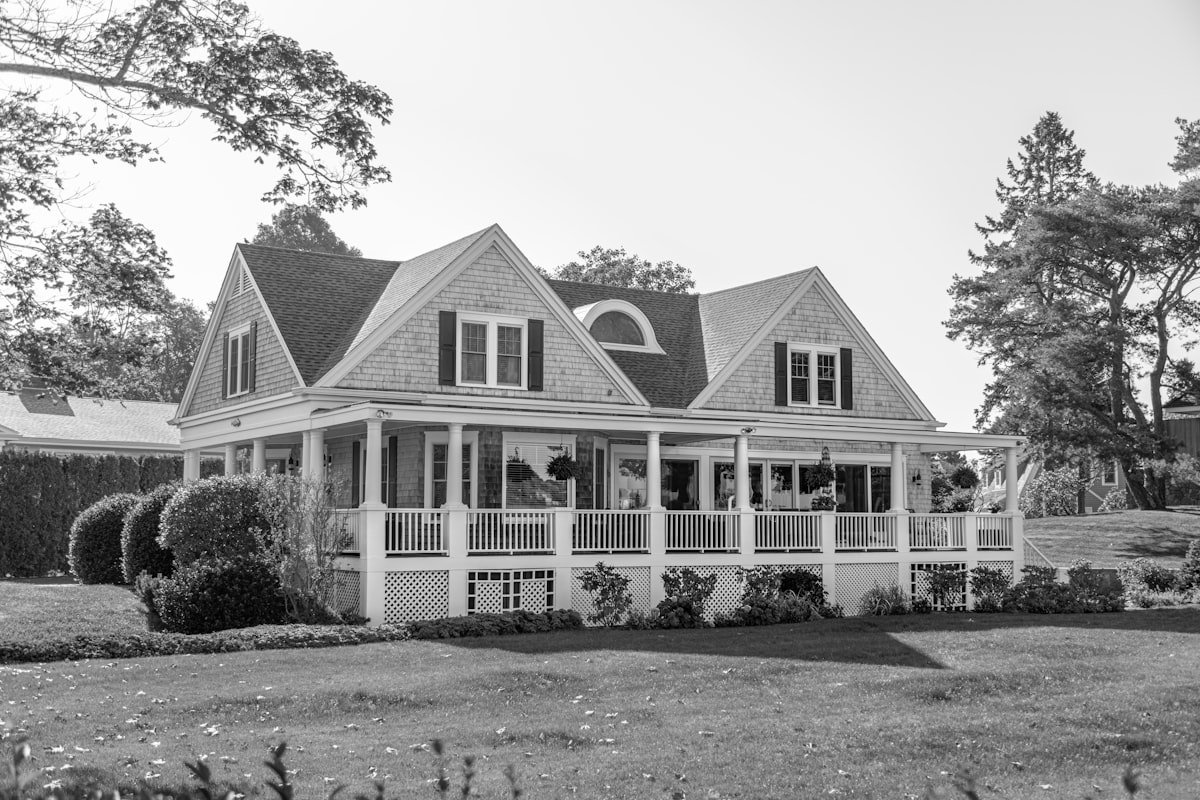
Build to rent is an investment strategy where you finance the construction of a new residential property with the intent to hold it as a long-term rental. Rather than buying an existing property and trying to make it cash-flow, you build a property specifically designed for your target rental market. The property is financed with a construction loan during building, then refinanced into a permanent long-term loan once complete.
This strategy has exploded in popularity over the last 5 years because inventory shortages, rising home prices, and changing rental demand have made traditional rental property acquisitions more expensive and harder to source. Building gives investors control over cost, quality, and the final product's rental appeal.
| Parameter | 2026 standard |
|---|---|
| Structure | Two loans: a construction loan during the build, refinanced into a long-term DSCR loan at completion |
| Construction leverage | Up to 85% loan-to-cost and up to 75% of projected finished value, whichever binds first |
| Construction funding | Draws against completed and inspected work, interest on the drawn balance only |
| Permanent leverage | DSCR terms on the finished rental, up to 80% LTV on a purchase and 75% on a cash-out refinance |
| Permanent qualification | The finished property's rent against its own payment. No tax returns, no W-2s, no debt-to-income review |
| Typical build window | 12 to 18 months, and prudent plans carry a buffer beyond it |
| Rent premium | New construction typically commands 10 to 20% more than comparable older stock nearby |
| Deferred maintenance | None at handover, and the major systems are under warranty |
Published program ceilings, not a quote. Both legs are underwritten separately and the second one should be scoped before the first one closes.
Why Investors Are Building Instead of Buying
Inventory shortage in desirable markets. In hot markets, quality single-family rentals are hard to find. Properties get bought by owner-occupants or other investors before they hit the market. By building, you create the inventory you need rather than competing for limited existing supply.
Home prices have outpaced rental income growth. Purchase prices have climbed faster than rents. In many markets, buying an existing property at market rates yields poor cash flow (low DSCR). Building to rent allows you to start from land cost plus construction, which can be cheaper than buying an existing comparable property. Better economics equals better cash flow.
New construction commands premium rents. Tenants prefer new properties with modern finishes, energy efficiency, updated appliances, and no deferred maintenance. New construction typically commands 10 to 20 percent higher rents than comparable older properties in the same neighborhood.
Lower maintenance and tenant issues. New properties have fewer maintenance emergencies. No 30-year-old roof that might fail next month, no outdated electrical or plumbing, no surprise foundation issues. Lower maintenance means higher net income and longer holding periods before major capital improvements are needed.
You control the final product. When you build, you design the property. Want an open floor plan? No problem. Want modern fixtures and finishes? You pick them. Want specific square footage or bedroom count for your target market? You determine it. This control creates a property optimized for your rental market and tenant profile.
The BTR Financing Strategy: Construction to DSCR
The beauty of build to rent is the financing structure. Two loans work together to make this strategy cash-flow efficient.
Phase 1: Construction loan. You finance the building phase with a construction loan. This loan funds the project in draws as construction progresses. Interest accrues only on funds drawn (not the full commitment), and interest reserve is funded at closing, so you're not making out-of-pocket payments during construction.
Phase 2: Permanent DSCR loan. When construction is complete, you refinance into a 30-year DSCR loan. The DSCR loan is based on the property's projected rental income, not your personal income. This DSCR loan becomes your long-term financing to hold the property as a rental for 10, 15, or 20+ years.
The two-loan strategy lets you minimize costs during construction and lock in long-term financing based on cash flow once the property is complete and producing rental income.
How the Two-Loan Strategy Works
Timeline: Day 1 through Month 18 (construction): Use construction loan. Month 12 (nearing completion): Apply for DSCR refinance with your permanent lender. Month 18 (construction complete): Close DSCR loan, pay off construction loan, now you own the property with 30-year DSCR financing.
Interest costs: During construction you are paying interest on an outstanding balance that grows as you draw funds, not on the full commitment. Take the build worked through below: a $385,000 project financed at 85% loan-to-cost, so a $327,250 construction loan. Because the money is released in draws, the average outstanding balance across the build runs closer to $200,000, and at a 9.5% construction rate that is roughly $1,583 per month in interest. That comes out of the interest reserve funded at closing, so you are not writing monthly checks during construction.
Once you refinance, the arithmetic changes completely. The payment is now based on the full loan amount and it amortizes. Refinancing that $327,250 balance at 7% over 30 years is roughly $2,177 per month in principal and interest. Now tenant rent is covering it: at $2,300 a month the ratio is about 1.06x measured on principal and interest alone. Note carefully what a lender actually measures. The ratio is calculated against full PITIA, which means taxes, insurance and any association dues sit in the denominator too, so the real qualifying ratio on this property is lower than 1.06x and the rent has to cover more than the mortgage payment. You need to clear 1.00x on that full number, not on principal and interest.
Exit strategy built in: If you decide to sell after 5 years, you sell the property at its current market value (hopefully higher than when built, plus rent growth), pay off the DSCR loan, and pocket the spread. If you want to hold longer, the 30-year DSCR loan lets you. No prepayment penalties on DSCR loans. No restrictions. Hold it for 30 years or sell after 10; the choice is yours.
| Stage | What happens | Which loan is live |
|---|---|---|
| Before breaking ground | Scope both loans. Confirm the finished property will carry a DSCR loan before you commit to the build budget | Neither, and this is the cheapest moment to find a problem |
| Ground-breaking through construction | Draws released against inspected work. Interest accrues on the drawn balance and is served by the interest reserve | Construction loan |
| Roughly 90 days before completion | Apply for the permanent refinance and get the rate locked | Construction loan, with the DSCR file in underwriting |
| Certificate of occupancy | DSCR loan funds and retires the construction balance | Handover, construction to permanent |
| Rent-up | First tenant placed. Budget a lag between completion and a signed lease | DSCR loan |
| Hold or sell | A 30-year fixed DSCR loan lets you hold indefinitely, or sell and pay it off | DSCR loan |
BTR Deal Economics with Detailed Example
Let's walk through a realistic build to rent deal to show how the numbers work.
The project: You find a lot in an emerging suburban market. New construction is desirable. You want to build a 3-bed, 2-bath single-family home targeted at young families and professionals looking for modern rentals.
Land and construction costs: Land acquisition: $120K. Hard costs (labor, materials, equipment): $180K. Soft costs (architecture, permits, insurance, construction management): $50K. Contingency (10%): $35K. Total project cost: $385K.
Projected finished value: Similar new construction homes in the area are selling for $500K to $520K. You project a conservative finished value of $500K for your appraisal and BTR strategy.
Financing structure: You get an 85% LTC construction loan. LTC is 85% of total project cost. 85% x $385K = $327K loan amount. You're putting in 15% x $385K = $57.5K equity.
You also meet the LTARV requirement: LTARV is 75% x $500K finished value = $375K maximum. Your $327K loan is below that cap, so you're approved on both ratios.
Construction timeline: 15 months from breaking ground to final inspection and certificate of occupancy.
Construction-phase interest: Construction loan rate is 9.5% (typical for construction in 2026). During construction, your average outstanding balance is roughly $200K (you draw gradually). Interest accrues at 9.5% on the outstanding balance. Average monthly interest: $200K x 0.095 / 12 = $1,583 per month. However, you funded an interest reserve at closing. That reserve covers interest for 16 months. So you're not making out-of-pocket interest payments.
Refinance into DSCR: At month 12 (nearing completion), you apply for DSCR refinance. You get rent comps for new construction in the area: $2,100 per month is realistic for a 3-bed, 2-bath new construction in this market. Your DSCR lender locks a quote at 7% over 30 years on the full $327K loan amount. Monthly P&I payment: roughly $2,170. Your DSCR is $2,100 / $2,170 = 0.97x. That's just below 1.00x. Most lenders want at least 1.00x or better for quality terms. So you lower the debt or increase the projected rent. If you negotiate at $2,150 monthly rent (achievable with updated comps), your DSCR is 0.99x. Still tight. You could reduce the loan amount to $315K, bringing the payment to $2,087 and DSCR to 1.03x. Or you project $2,200 rent (realistic in a strong market), giving DSCR 1.01x.
Net cash flow analysis: Let's say you close at $2,150 rent, $315K DSCR loan at 7% over 30 years. Monthly P&I is $2,087. Rent: $2,150. Gross cash flow before taxes and expenses: $63/month. That's break-even, which is why most BTR investors plan to hold for appreciation and refinancing upside, not monthly cash flow.
Why that's okay: You built a $500K property with only $57.5K of your own equity. If you hold for 5 years and the property appreciates to $550K (5% annually), and you pay down the loan to $295K through principal paydown, your equity is now $255K. You've turned $57.5K into $255K in 5 years (340% return). That's the build to rent model: borrow heavily, build a quality property, let the market appreciate and rents grow, then either sell into that appreciation or refinance and do it again.
The construction leg, sized on a $385,000 build
LTC binds first on this deal, so the loan is capped at $327,250 rather than the $375,000 the finished value alone would have supported. Roughly $57,750 of your own capital builds a property worth about $500,000 at completion. That gap between what it costs to build and what it is worth finished is the whole reason build to rent exists as a strategy, and it is also the first thing an appraisal can take away from you.
Best Markets for Build to Rent
Supply-constrained markets. Markets where new construction is limited and existing inventory is tight command premium prices and rents. Austin, Dallas, Denver, Tampa, Charlotte, and Phoenix have all seen strong BTR activity because supply of quality rentals is limited.
Strong population growth markets. Markets with 2 to 3 percent annual population growth see demand for housing consistently outpacing supply. Young professionals move to these markets and need rentals. New construction is a natural magnet.
Markets with positive rental price growth. Avoid markets where rents are declining or flat. You want markets where rental growth is 2 to 3 percent annually. This offsets property appreciation and means you're getting paid to wait out any short-term vacancy or management issues.
Affordable compared to national average. Markets where the price-to-rent ratio is still reasonable (not like San Francisco or NYC) tend to have better BTR economics. You can build a $400K property that rents for $2,000+, giving you leverage.
| Signal | What good looks like | Why it matters to a BTR file |
|---|---|---|
| Supply | New construction is limited and quality rental inventory is tight | Constrained supply is what supports the new-build rent premium |
| Population growth | Roughly 2 to 3% annually | Demand keeps outrunning supply over the length of a build |
| Rent growth | Roughly 2 to 3% annually, and positive | Flat or falling rents erase the margin while you are still building |
| Price-to-rent ratio | Still reasonable against the national average | A property you can build affordably and rent well is where the leverage works |
Single-Family BTR vs. Small Multifamily
Single-family BTR: Build a 3 or 4-bedroom house on a residential lot. Easier to finance (single-family is less risky than multifamily in most lenders' eyes). Easier to manage (one unit, one tenant). Easier to sell if you want an exit. Better for investors new to BTR. Single-family also qualifies for better rates and terms on DSCR loans than multifamily.
Duplex or triplex BTR: Build a duplex (2 units) on a larger lot. More total rent, but more complexity in construction, financing, and management. Duplex properties are classified as commercial real estate on DSCR loans, which sometimes means slightly higher rates. But if you can rent a duplex for $1,200 per unit, you're getting $2,400 total rent with DSCR loan coverage based on gross rents.
Small subdivision: Build 3 to 10 single-family homes on a larger tract. This is true development. Higher risk, higher complexity, but also higher potential returns. Requires more sophisticated financing, more experienced builder, and more project management. Not for first-time BTR investors.
Start with single-family. Master one property, then consider a duplex. Scale to subdivisions once you've proven the model works.
| Approach | What it is | Complexity | Best for |
|---|---|---|---|
| Single-family | A three or four bedroom house on a residential lot | Lowest. One unit, one tenant, easiest to finance and to sell | Your first BTR, and it earns better DSCR terms than multifamily |
| Duplex or triplex | Two or three units on a larger lot | Higher in construction, financing and management | Your second or third, once the model is proven. Note these are treated as commercial on a DSCR loan |
| Small subdivision | Three to ten single-family homes on a tract | Highest. This is genuine development | Experienced builders only. Not a first BTR project |
Spec Homes vs. Custom Builds for BTR
Spec homes: You build on an existing lot to market standards, not to a specific buyer's specs. You're speculating that someone will want to rent (or eventually buy) a 3-bed, 2-bath with open floor plan and granite counters. Spec homes are quicker to finance, quicker to build, and quicker to rent up. For BTR investors, spec homes are lower risk.
Custom builds: A tenant or user has already signed on and specs the home. Custom builds have lower market risk (you know the end user), but longer timelines and more change orders. For BTR, avoid custom. You're taking on tenant risk before the property is even built. If the tenant backs out, you're stuck with a property that might not suit the market.
| Factor | Spec build | Custom build |
|---|---|---|
| Built to | Market standard for the area | A specific end user's requirements |
| Timeline | Shorter, and more predictable | Longer, with more change orders |
| Market risk | You are betting the market wants what you built | Lower, because the end user is already identified |
| Tenant risk | Carried after completion, when you can still re-price | Carried before completion. If they walk, you hold a property built to one person's taste |
| Verdict for BTR | Preferred | Generally avoid |
Working with Builders and General Contractors
The contractor you choose makes or breaks your BTR project. This is not the place to save a few percentage points by going with the cheapest bid.
Contractor selection: Look for a general contractor with proven single-family or small multifamily BTR or rental experience. Ask for three references of recent rental property builds they've done. Call those references and ask about schedule adherence, budget adherence, quality of finishes, and how issues were handled.
Fixed-price contract: Get a fixed-price contract for the construction. This protects you from cost overruns. The contractor bears the risk of material inflation or labor challenges. In exchange, you'll pay slightly more than if you took the overrun risk, but that certainty is worth it.
Draw schedule alignment: Make sure your contractor's draw requests align with the construction schedule you provided to the lender. If the lender expects draws every 30 days but your contractor is project, you have cash flow gaps.
Inspections and warranty: Require a builder's warranty (usually 1 to 2 years). Require that your lender's inspector sign off on each draw. Get a final property inspection by a third-party inspector before closing out the construction loan.
Permits, Timelines, and Budget Management
Permits and approvals: Never underestimate municipality timelines. Some cities approve permits in 30 days. Others take 90+. Add this to your timeline upfront. Build a 30-day buffer into your project schedule. If permits take longer, you're ahead. If they come fast, you start early.
Timeline management: Construction delays are inevitable. Weather, supply chain, rework, and inspections all add time. Plan for 12 to 15 months of construction but prepare for 16 to 18. Your lender will allow extensions, but extensions come with extension fees and keep you paying interest longer.
Budget management: Set aside a 10 to 15 percent contingency fund. This covers surprises. Soil is worse than expected, requiring additional prep. You find an issue during framing that requires structural changes. Material costs spike. The contingency is your buffer. If you don't use it, great; it becomes additional equity. If you do use it, you're not scrambling for extra capital mid-project.
| Line item | Plan for | What happens if you skip it |
|---|---|---|
| Cost contingency | 10 to 15% of the build budget | An overrun turns into an equity call you did not plan for |
| Schedule buffer | Plan 12 to 15 months, prepare for 16 to 18 | You run past the interest reserve and start paying interest in cash |
| Permit buffer | An extra 30 days on top of the quoted approval time | Ground-breaking slips and every downstream date slips with it |
| Vacancy before first tenant | 30 to 60 days after completion | You carry a full payment against zero rent |
| Rent-up lag | 2 to 3 months from completion to a signed lease | The same, for longer than most models assume |
| Property management | 8 to 12% of collected rent | Your projected cash flow was never real |
| Rent realism | Comparable new-build rents, not aspirational ones | The appraiser's rent schedule sets the DSCR, not your optimism |
BTR Exit Strategies
Hold and refinance: Build the property, stabilize it with tenants, hold for 3 to 5 years while appreciation occurs and rents grow. Then refinance into a new DSCR loan (or conventional loan if you have documented income). The DSCR loan document checklist covers what that refinance file needs. Use the refinance to pull out equity, which you redeploy into another project. Build it, hold it, refinance it, repeat.
Hold and hold: Build the property, refinance into a 30-year DSCR loan, keep it until mortgage payoff. This is the wealth-building strategy. Rent grows, you pay down principal, 30 years later you own the property free and clear.
Sell after stabilization: Build, refinance into DSCR, hold for 3 to 5 years while the property appreciates and the neighborhood stabilizes. Then sell to an owner-occupant or another investor. Your gain is the difference between what you sold for and your cost basis (land plus construction plus financing costs). In a 5 percent appreciation scenario, a $500K property becomes $638K in 5 years.
Tax Advantages of New Construction Rentals
Cost segregation: New construction properties can benefit from cost segregation, a tax strategy that accelerates depreciation deductions. Rather than depreciating the building over 27.5 years, a cost seg breaks out personal property (fixtures, appliances, carpet) and land improvements (parking, landscaping) into shorter depreciation schedules (5 to 15 years). This creates larger early-year deductions, reducing taxable income.
Depreciation benefits: The entire structure is depreciated over 27.5 years. On a $500K building value, that's roughly $18K per year in depreciation deductions. These deductions are taken whether or not you made a profit. If rent is $2,100 and your payment is $2,087, you have minimal taxable income. But with depreciation deductions, you might show a tax loss that offsets other income.
30/1031 consideration: If you're building a series of properties, don't underestimate the value of a 1031 exchange. Build property A, sell it after 5 years for $600K, 1031 exchange into property B (or multiple properties). You defer capital gains taxes and redeploy your equity.
Common BTR Mistakes
Overestimating rental rates: Investors fall in love with their new property and project optimistic rents. Use actual comps, not hopes. If new construction 3-beds in the area rent for $2,000, don't assume yours will rent for $2,300 just because it's nice. Nice gets you $2,050 or $2,100, not a huge premium.
Underestimating vacancy and turnover: New properties need time to rent up. Budget 30 to 60 days of vacancy before the first tenant moves in. Budget 2 weeks of vacancy between tenants for turnover. Never underestimate these timelines.
Ignoring management costs: Factor in 8 to 12 percent of rents for professional property management. If you're self-managing, you're working for that money. The DSCR qualification assumes professional management.
Not planning for debt service during the rent-up phase: Even if the property finishes early, rent-up takes time. You might have a completed property in month 14 but not a signed lease until month 16. That gap is your problem. Budget for a 2 to 3 month rent-up lag.
How Pinnacle Funding Network Supports BTR Investors
Pinnacle Funding Network provides both the construction and permanent financing pieces of the BTR strategy. We typically work with BTR investors by structuring a construction loan (short-term, interest-only) with a pre-commitment for a DSCR loan (permanent, 30-year) once the property is complete. This eliminates refinance risk. You know your permanent lender before you break ground.
Pinnacle Funding Network construction loans offer up to 85% LTC and 75% LTARV, which allows for aggressive BTR deals. Pinnacle Funding Network DSCR loans go up to 75% LTV on completed rentals with no personal income requirement. Most importantly, Pinnacle Funding Network understands BTR strategy and structures deals accordingly, from first-time single-family builders to seasoned developers with subdivisions.