Contents
What Is a Ground-Up Construction Loan?How Construction Loans Differ from Fix-and-Flip LoansThe Construction Loan Process: Step by StepUnderstanding LTC, LTARV, and Land Value RatiosThe Draw Schedule ExplainedBuilder and Borrower RequirementsDocumentation ChecklistConstruction Timeline ManagementCommon Mistakes to AvoidTransitioning from Construction to Permanent FinancingWhen to Use Construction Loans vs. Buying Existing PropertiesThe Complete Ground-Up LibraryComplete Guide
New Construction Loans: The Complete Guide for Real Estate Investors (2026)
What Is a Ground-Up Construction Loan?
Published by Pinnacle Funding Network | Updated August 2026
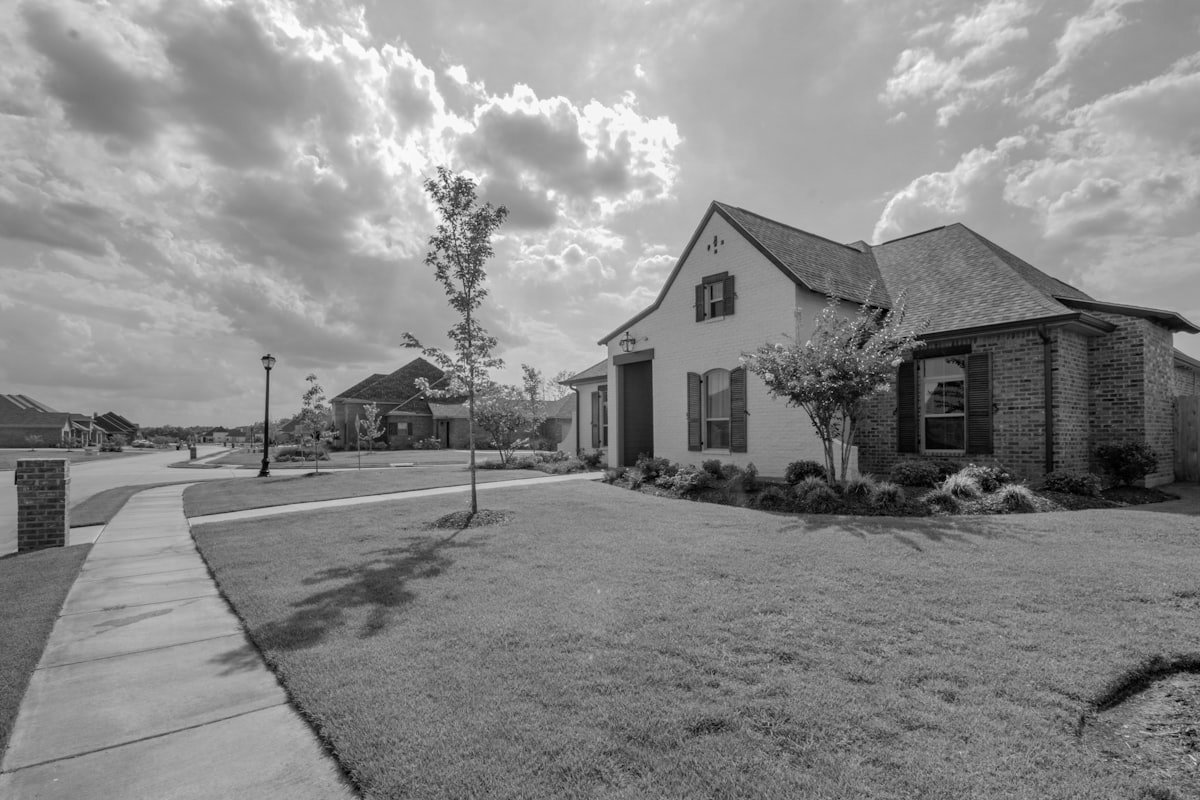
A ground-up construction loan finances the building of a new residential property from acquisition through completion. Unlike traditional mortgages that are disbursed in full at closing, construction loans disburse funds in draws tied to specific construction milestones and completed work phases.
The lender provides a total commitment amount (say, $1.2 million) but doesn't hand you a check for the entire amount on day one. Instead, as construction progresses, you request draws. Your contractor certifies that specific work is complete (foundation, framing, rough electrical, drywall, etc.), an inspector verifies the work, and the lender disburses that phase's funds. This structure protects both the borrower and the lender by ensuring that funds are being used for completed work, not wasted or misallocated.
| Parameter | 2026 standard |
|---|---|
| Loan-to-cost (LTC) | Up to 85% of total project cost |
| Loan-to-after-repair-value (LTARV) | Up to 75% of the projected finished value |
| Land portion | Commonly capped near 60% of land value at closing |
| Term | 12 to 24 months |
| Funding method | Draws against completed and inspected work, not one wire at closing |
| Interest | Accrues on the drawn balance only |
| Interest reserve | Funded at closing, typically sized to cover 12 to 18 months |
| Draw turnaround | 3 to 5 business days after the inspection is approved |
| Credit | Typically 680 or higher |
| Contingency | 5 to 10% of the project budget is standard |
| Soft costs | Commonly 15 to 25% of total project cost |
| Time to close | 30 to 45 days |
Published program ceilings, not a quote. A specific file is priced on credit, documented building experience, property type and market.
How Construction Loans Differ from Fix-and-Flip Loans
Construction loans and fix-and-flip loans both involve building or improving properties, but the timelines and risk profiles differ significantly.
A fix-and-flip loan finances the purchase of an existing property plus the cost of renovations. The property already exists, which means there's an existing appraisal value and comparable sales data. The lender knows what they're lending against. Fix-and-flip loans typically close in 14 to 21 days, and in 7 to 10 on an expedited file, because the main underwriting variable is the purchase price and renovation scope, both of which are relatively straightforward to verify.
Construction loans finance a property that doesn't exist yet. The lender is underwriting a project plan, cost estimates from contractors, and a projected finished value. There are no comparables because the finished product hasn't been built. Construction loans require more detailed feasibility analysis, which takes longer (30 to 45 days to close) but results in more flexible financing structures.
Construction loans also typically have longer terms. A fix-and-flip is usually 12 months or less because the intent is to buy, improve, and sell quickly. A construction loan might extend 18 to 24 months because building from the ground up naturally takes longer. Interest-only payments during construction with draws based on completed work also differ (learn more in our construction loans explained article) and from fix-and-flip structures, which typically accrue interest on the full loan amount whether funds are drawn or not.
| Factor | Ground-up construction | Fix and flip |
|---|---|---|
| What secures it | A property that does not exist yet | A property that already exists and has comparables |
| What is underwritten | Drawings, cost estimates, the builder and a projected finished value | Purchase price and renovation scope |
| Time to close | 30 to 45 days | 14 to 21 days, 7 to 10 expedited |
| Typical term | 18 to 24 months | 12 months or less |
| How interest accrues | On the drawn balance only | Commonly on the full loan amount whether drawn or not |
| Feasibility review | Detailed, and it is what makes the close longer | Lighter, because the collateral can be appraised today |
The Construction Loan Process: Step by Step
Understanding the full timeline helps you prepare documents early and avoid delays.
Pre-approval (48 hours to 1 week): You provide basic project information: site location, scope of work, estimated cost, contractor info, and timeline. The lender reviews feasibility and provides a pre-approval if the project makes sense. This doesn't commit you to anything but signals that financing is likely available if you move forward.
Formal application (1 week): You complete a full application with detailed project plans, contractor bids, your financial statements, entity documentation, and market analysis. This is the substantive underwriting phase.
Appraisal and feasibility (2 weeks): The lender orders a construction appraisal that estimates the finished property value. Our inspector meets the contractor to discuss timeline and capability. Market analysis confirms that finished values are justified by comparable sales in the area.
Underwriting approval (1 to 2 weeks): The loan committee reviews all documentation and approves or asks for clarifications. Contingencies are noted (e.g., "Lender must approve final grading plan before closing").
Title and legal work (1 to 2 weeks): Title is searched, title insurance is committed, and loan documents are prepared. Any liens or title issues are resolved.
Closing (1 day): You sign loan documents, the lender disburses the initial draw (usually enough to cover lot acquisition or down payment to the contractor), and the interest reserve is funded. You're now ready to break ground.
Understanding LTC, LTARV, and Land Value Ratios
Three key ratios determine how much you can borrow. Understanding the difference prevents surprises at underwriting.
LTC (Loan-to-Cost): This is the loan amount divided by the total project cost. Total project cost includes land acquisition, hard costs (labor, materials, equipment), soft costs (architect, permits, insurance, construction management), and contingency. If your project costs $1M total and you borrow $850K, your LTC is 85%. Most lenders offer up to 85% LTC, which means you're required to put in 15% equity of your own (or have a partner put it in). Pinnacle typically allows up to 85% LTC for qualified borrowers.
LTARV (Loan-to-After-Repair-Value): This is the loan amount divided by the projected finished property value. If your finished townhome will appraise at $500K and you borrow $375K, your LTARV is 75%. The lender uses this as a safety net. If the construction loan has to be accelerated (converted to a short-term loan at higher rates) because you can't refinance into permanent financing, the lender still has equity cushion. Pinnacle typically allows up to 75% LTARV.
Land value as a separate constraint: Some lenders apply limits to what they'll lend on the land itself, separate from the building cost. Land might be 15 percent of total project cost, but a lender might say "we'll only lend 60% LTV on the land portion." This is to protect against the scenario where construction stalls and the lender has to foreclose, selling just the land. Pinnacle evaluates land value as part of overall feasibility but doesn't artificially constrain land financing if the finished project is sound.
Most deals will hit one of these limits first. A project with high soft costs but strong finished values will typically be constrained by LTC (you need more equity). A project with lower finished values relative to construction cost will be constrained by LTARV.
| Ratio | What it divides | Ceiling | Binds first when |
|---|---|---|---|
| LTC, loan-to-cost | Loan amount over total project cost | 85% | Soft costs are high and finished values are strong |
| LTARV, loan-to-after-repair-value | Loan amount over projected finished value | 75% | Finished value is modest relative to what it costs to build |
| Land LTV | Land advance over land value | 60% | Land is a large share of the budget, or permits are not yet approved |
Worked example: both caps tested on one deal
LTARV binds first here, so the deal is capped at $825,000 even though the cost ratio would have allowed $850,000. The extra $25,000 has to come from you. This is the most common surprise in a construction file and it is entirely avoidable: run both ratios before you commit to a budget, not after the appraiser returns a finished value.
The Draw Schedule Explained
The draw schedule is the heartbeat of a construction loan. It determines when money gets disbursed and how you manage cash flow during building.
At closing, a detailed draw schedule is agreed upon. For a single-family home, it might look like: 5% of loan at closing (for site prep), 15% at foundation completion, 20% at framing completion, 15% at mechanical/electrical rough-in, 15% at drywall, 15% at final inspection, and 15% at close-out. These percentages align with construction phases and the timing of your contractor's invoices.
When a phase is substantially complete, you submit a draw request. Your contractor certifies that specific work is 100% complete and meets contract specs. You provide: a draw request form, contractor certificate of completion, lien waivers (proof that the contractor paid their subs), photos of the work, and inspection request. The lender's inspector visits the site, verifies the work is actually complete, and approves the draw. Typically, funds are disbursed 3 to 5 business days after approval.
Interest accrues daily on the outstanding balance. If you've drawn $600K and interest is 8% annually, you're paying approximately $48 per day in interest ($600K x 0.08 / 365). As you draw more funds, daily interest increases. However, the lender funds an interest reserve at closing. This reserve covers interest for 12 to 18 months of construction. So you're not paying out-of-pocket interest monthly; it's coming from the reserve. If your project runs longer than the reserve covers, you'll start making monthly interest payments out of pocket.
| Milestone | Share of loan | Cumulative |
|---|---|---|
| Closing, for site preparation | 5% | 5% |
| Foundation complete | 15% | 20% |
| Framing complete | 20% | 40% |
| Mechanical and electrical rough-in | 15% | 55% |
| Drywall | 15% | 70% |
| Final inspection | 15% | 85% |
| Close-out | 15% | 100% |
Illustrative. Your schedule is agreed at closing and tracks your own contractor's invoicing. Each draw needs a request form, a contractor certificate of completion, lien waivers, photographs and a passed inspection.
Builder and Borrower Requirements
Construction loans require that either the builder or the borrower (or both) demonstrate construction capability and financial strength.
Builder requirements: The builder should have completed at least 3 ground-up residential projects of similar scope. If the builder is newer or has limited experience, the lender will scrutinize them more carefully and may require additional guarantees or contingencies. The builder's financial statements should show adequate working capital. Insurance and bonding must be in place and verified.
Borrower requirements: If you're the borrower (the entity applying for the loan), you need solid personal or business financials, good credit (typically 680 or higher), and realistic plans for the project. You don't need to be an experienced builder, but you need to demonstrate that you understand the project and can manage contingencies. If you're borrowing $500K, a lender wants to see that you have a net worth cushion and haven't borrowed excessively elsewhere.
Entity structure: The loan is typically made to an LLC, partnership, or corporation, not in your personal name. The entity owns the property and the construction loan. As the owner, you may be asked to guarantee the loan personally, depending on the entity's financial strength and the lender's requirements.
Documentation Checklist
Having complete documentation before you apply dramatically speeds the underwriting process. Incomplete applications get delayed in document requests.
Project documents: Architectural plans and specifications; detailed cost breakdown by phase and line item; contractor bids or estimates; cost estimate breakdown template showing land, hard costs, soft costs, contingency, and total project cost; construction timeline with major milestones; site plan and survey (preliminary if final not yet available); environmental Phase I if applicable; photos of the site.
Builder/contractor documents: Contractor resume showing 3+ comparable projects with dates and costs; references (names and contact info of prior clients); proof of general liability insurance and contractor bonding; contractor financial statements (balance sheet and last 2 years tax returns); contractor's license copy.
Borrower/entity documents: Business entity documents (Articles of Organization, Operating Agreement, EIN assignment letter, Certificate of Good Standing); personal financial statement for all principals (assets, liabilities, net worth); personal credit authorization; personal tax returns for past 2 years; business tax returns for past 2 years if entity has been operating; proof of liquid reserves (bank statements showing cash on hand).
Property documents: Deed or purchase agreement if land is already owned; title report or title commitment; property insurance quote for the finished property; lender's title insurance quote; preliminary appraisal or cost estimate for finished value.
Go through this list before approaching a lender. Having everything ready cuts underwriting time in half.
| Package | Documents |
|---|---|
| Project | Architectural plans and specifications, cost breakdown by phase and line item, contractor bids, construction timeline with milestones, site plan and survey, environmental Phase I if applicable, site photographs |
| Builder | Contractor resume showing three or more comparable projects with dates and costs, client references, general liability insurance and bonding, contractor financial statements, licence copy |
| Borrower and entity | Articles of Organization, Operating Agreement, EIN letter, Certificate of Good Standing, personal financial statement for all principals, credit authorization, two years of personal and business returns, bank statements evidencing liquid reserves |
| Property | Deed or purchase agreement, title report or commitment, property insurance quote on the finished building, lender's title insurance quote, preliminary appraisal or cost estimate of finished value |
Construction Timeline Management
Construction loans have specific terms, typically 12 to 24 months from closing to completion. Going over this timeline can be expensive.
At closing, a target completion date is agreed upon. If your project is complete before that date, great; you refinance into permanent financing and you're done. If you finish early and need to hold the property for a bit, the interest-only payments continue but they're manageable.
If you're approaching the loan maturity date and not finished (a situation similar to a hard money loan maturing), you have options: extend the construction loan (most lenders allow extensions with fees), or request that permanent financing (DSCR loan if building to rent) be put in place early to cover the gap. Some lenders also offer "exit" loans that bridge until permanent financing closes.
The key is to manage the timeline carefully. If construction is running 3 months behind, notify the lender immediately. Don't wait until the maturity date to disclose delays. Lenders appreciate transparency and are typically willing to work with borrowers who keep them informed.
Common Mistakes to Avoid
Underestimating soft costs: Builders often focus on hard costs (materials and labor) but underestimate soft costs like architect fees, permits, insurance, and construction management. Soft costs can be 15 to 25% of total project cost. Budget conservatively.
Hiring contractors without verified experience: A contractor's bid might be $50K lower than competitors, but if they've never built a property like yours, you're taking on significant risk. Spend time verifying references and looking at prior work. The cheapest bid isn't always the best bid.
Assuming finished values will match projections: Market conditions change. If you project a finished value of $500K and the market softens to $450K, your LTARV constraint becomes tighter. Build in conservative projections and get an independent appraisal.
Not securing all permits before closing: Some lenders require that at least the major building permit be issued before or immediately after closing. Don't count on permits being expedited if your project is politically contentious or in a slow municipality.
Overextending on timeline: Building is unpredictable. Weather delays, supply chain disruptions, and rework all add time. Budget 10 to 15% time cushion. If you project 12 months of construction, plan to finish in 13 to 14 months.
Not maintaining reserves: Construction always has surprises: site conditions are worse than expected, material costs spike, rework is required. Have a contingency fund separate from the loan. A 5 to 10% contingency built into the project budget is standard.
Transitioning from Construction to Permanent Financing
At the end of construction, you need an exit strategy. Most construction loans are designed to be temporary financing bridges. Permanent financing takes over when the building is complete.
Build-to-sell exit: If you're building a spec home to sell, the buyer typically gets a traditional mortgage (FHA, conventional, or cash). Your construction loan is paid off from the sale proceeds. Timing is important: don't finish and hold the property waiting for a buyer because your interest-only payments continue.
Build-to-rent exit: If you're building a property to hold as a rental (see our build-to-rent strategy guide), you'll refinance into a long-term loan. A DSCR loan is ideal for this because it qualifies based on the projected rental income, not your personal income. At or near completion, submit a rental projection and your lender will provide a DSCR quote. Most DSCR lenders will lock rates 30 to 90 days before completion, so you close the DSCR loan right when construction finishes. The DSCR loan proceeds pay off the construction loan balance.
Timing the refinance: Don't wait until the last day of the construction loan to apply for permanent financing. Start conversations 90 days before completion. If you're building to rent, provide your DSCR lender with photos, floor plans, and projected rent details. Get a DSCR quote before construction finishes. They'll lock your rate and issue a commitment before construction finishes.
| When | What happens | Why it is that early |
|---|---|---|
| Before the construction loan closes | Decide whether the exit is a sale or a refinance | The exit decides how much leverage and how long a term you want on the build |
| 90 days before completion | Open the conversation with the permanent lender | A file started at the last minute cannot be underwritten in time |
| 30 to 90 days before completion | Rate lock and commitment issued on the DSCR loan | Locks pricing while the building is still finishing |
| Certificate of occupancy | DSCR loan closes and pays off the construction balance | Interest-only construction payments stop the day it funds |
On a build-to-sell exit the buyer's own mortgage retires the construction loan. On a build-to-hold exit the refinance is yours, and a DSCR loan qualifies it on projected rent rather than on your personal income.
When to Use Construction Loans vs. Buying Existing Properties
Construction loans aren't right for every investor. Understanding when to build versus buy is a critical business decision.
Build when: You find land at a good price and finished properties in the market are overpriced. Building yourself gives you control over cost and allows you to optimize the finished product for your market. Build when you want to create a property tailored to your rental market (specific unit count, finishes, amenities). Build when you're in a supply-constrained market where new inventory commands premium rents or resale values.
Buy existing when: Good deals on existing properties are plentiful and building would require a longer timeline. If you can buy a stabilized rental property today with a DSCR loan and have it cash-flowing immediately, that's often better than waiting 18 months for a new construction project. Buy when you want to minimize risk and uncertainty. Buying an existing property with known condition and established tenancies is lower risk than betting on a construction timeline and finished property value.
The best investors do both: they buy existing properties for cash flow and build select properties when market conditions align. Use our DSCR calculator to compare financing options. A healthy real estate portfolio includes both strategies.
| Consideration | Build it | Buy it |
|---|---|---|
| Time to cash flow | 12 to 24 months of construction before a tenant | Immediate on a stabilized property |
| What you control | Layout, finish level and unit mix, built for the rental market you are targeting | Whatever the previous owner built |
| Deferred maintenance | None. Everything is new and under warranty | Inherited, and it is the usual source of first-year surprises |
| Cost certainty | Estimated, which is why a 5 to 10% contingency is standard | Known at contract |
| Financing | Two loans, construction then permanent | One loan |
| Where the risk sits | Execution, timeline and finished valuation | Condition, and the price you paid |